Radiance Printpack
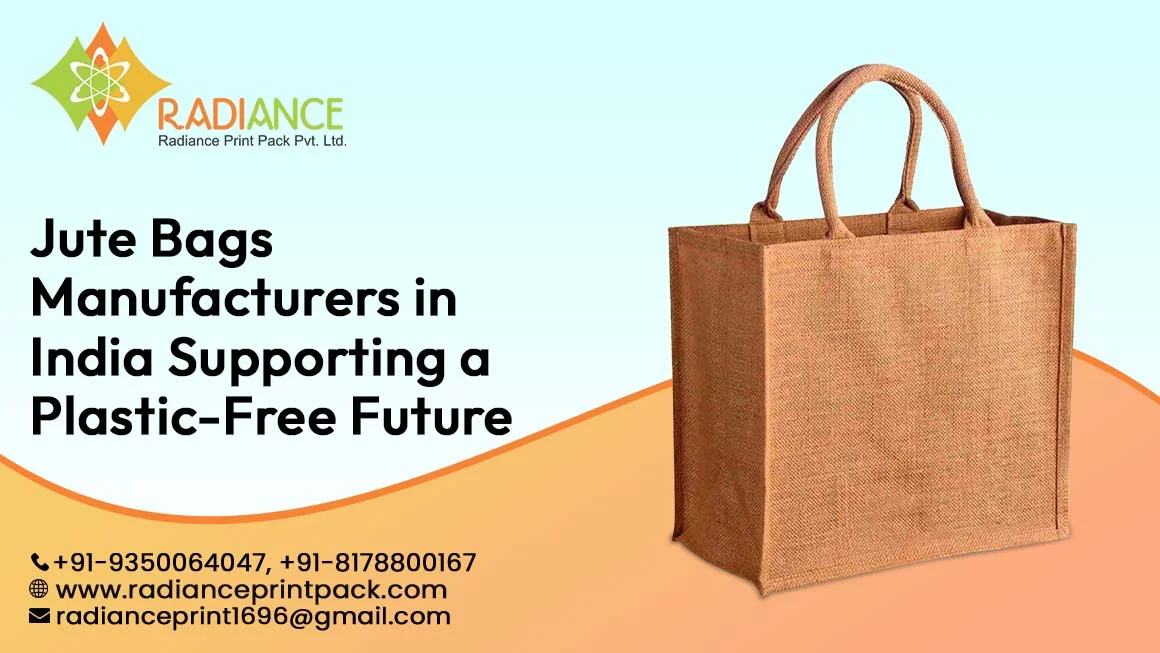
Due to growing awareness of the world about the issue of plastic pollution, India is turning forward with greener innovations. One of the major participants in this transformation is Jute Bags Manufacturers in India, that are not only making an alternative to plastic but also are marketing a lifestyle that is based on sustainability. Their products are not a fashion but a sign of the conscientiousness to the planet.
In this blog, we will write of how these manufacturers are changing the difference, why jute is such an environmentally friendly material and why this industry is emerging as a strong force in the creation of a plastic-free future.
As the Background of the Eco-Revolution Jute Production
Jute has been dubbed as the Golden Fibre, in India and not only due to its natural texture but also its effect on the environmentally friendly manufacturing.
• Renewable Resource: Jute is a naturally cultivated crop that is harvested in a time period of six months, so it is counted as one of the most resource saving crops.
• Low Environmental Impact: It does not require a lot of fertilizer or pesticide and it help in maintain the healthiness of the soil.
• Full biodegradation: In contrast to plastic Jute decomposes naturally and does not poison the ecosystem.
Such an ideal combination of eco-goods makes jute a good option to Jute Bags Manufacturers in India who are willing to make products that are helpful to people and the environment.
Empowerment of Local Communities in Every Strand of the Thread
All the jute bags manufactured are not only the environmentally friendly product but also the key of empowerment and opportunity to India rural populations. Jute industry is a very important industry that helps in enhancing the livelihoods of people, particularly those living in areas where agriculture is the primary income generating activity. It supports local artisans, small farmers and women self-help groups and provides a down effect of growth and independence.
1. Skill Development and Training
The manufacturing units of jute tend to conduct workshops and training programs that would impart new skills to the workers in the field of weaving, cutting, printing, and finishing.
All this is aimed at keeping them in touch with modern machinery and international design trends making traditional artisans professionals.
2. Women Financial Empowerment
Most of the jute manufacturing arrangements rely on women. They become financially independent and earn as well as pay household taxes through the fair pay and stable jobs.
This enhances their quality of life as well as establishing confidence and leadership in the community.
3. Sustainable and Secure Living
Jute production is sustainable unlike industries that rely on scarce natural resources. It is based on the year-round demand and renewable crops, which guarantee round-year employment.
It is also beneficial to farmers because jute farming enhances the soil and offers them with a source of extra income.
4. Community Development and Upliftment of the rural areas
They allow local economies to prosper since sectors that support such an economy, such as transport, packaging, and retailing, expand.
The focus on environmentally friendly production also stimulates the villages to live more environmentally-friendly, which results in cleaner settings and improved health scores.
Essentially, all the jute bags end up carrying more than products, it carries hope, self-help and vision of a stronger rural India based on sustainability and empowerment.
The Jute Production in India has an economic impact on industry
| Area of Impact | Effect of Jute Industry |
| Employment | Thousands of rural labour and craftsmen are employed. |
| Women Empowerment | Empowers women by increasing financial and self-reliance. |
| Training | Offers training on weaving, printing and packaging. |
| Sustainability | Anti-pollution Propagates a green production with constant demand. |
Redefining Packaging to a Plastic-Free Future
As governments and companies identify a substitute to plastic, Indian jute producers are inventing new types of packaging in various industries, which include food, fashion, agriculture, and retail.
- Reusable Shopping Bags: Fashionable and durable to use on daily basis.
- Gift Packaging: Beautiful and green presentation.
- Sturdier and durable: Grains, cement and fertilizers sacks.
Jute bags need to provide utility and aesthetic value as well: they are now a part of eco-conscious branding of numerous contemporary companies.
Final Thoughts
Jute Bags Manufacturers in India is an example that how India can blend their old skills with the new innovations. These producers are leading a greener future by focusing on best production and fair employment. As the brands like
Radiance Print Pack head the pack, a plastic-free world is no longer a dream on paper but changing into a thread-by-thread reality.
Frequently Asked Questions
Ans: It is environmentally friendly, strong and does not harm the environment.
Ans: Yes, they may be of different styles, colours and sizes.
Ans: Yes. Jute is a natural fibre which is commonly used in preparation of bags, baskets and packaging.
Ans: A bag made of jute of good quality can easily last a matter of years.
